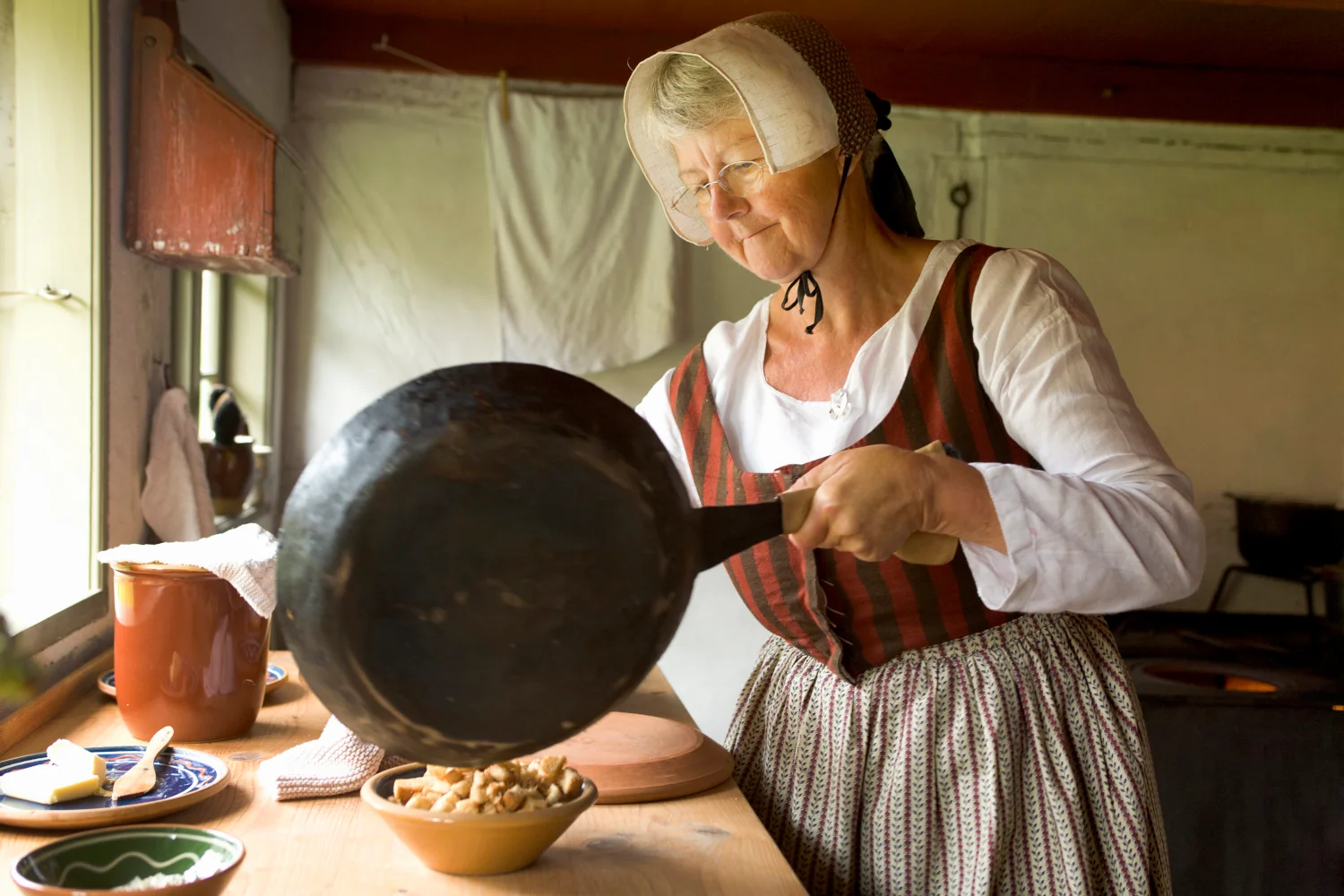
*Food is never just food. Across thousands of years and dozens of cultures, what Europeans have put on the table has told the story of conquest, trade, faith, class, and creativity. Pull up a chair — this is a feast worth savoring.*
The Ancient Foundations: Greece, Rome, and the First Flavours
Long before the croissant or the carbonara, before the brasserie or the bodega, European food began in the ancient Mediterranean. The Greeks and Romans did not simply eat — they theorized about eating, philosophized over it, and built entire social structures around the table.
Greek cuisine circa 500 BCE was defined by what scholars call the “Mediterranean triad”: grain, olive oil, and wine. Bread was the cornerstone of every meal, and the Greeks were sophisticated enough to distinguish between dozens of varieties. Fish — grilled, salted, or fermented into a pungent sauce called garos — appeared constantly on tables rich and poor alike. Honey sweetened everything from wine to pastries, and herbs like oregano and mint were used with a generosity that would feel familiar to anyone who has eaten in a Greek taverna today.
The Romans inherited the Greek table and expanded it in every direction. At its most extravagant — think the legendary banquets described by Petronius in his satirical novel the Satyricon — Roman dining was an exercise in conspicuous excess: dormice glazed with honey, flamingo tongues, whole roasted boars stuffed with live thrushes. But this was the theater of the elite. Ordinary Romans ate simply: bread dipped in olive oil and vinegar, porridge made from emmer wheat, olives, lentils, and, on lucky days, a bit of sausage or smoked fish.
What the Romans gave to the European kitchen, more than any specific dish, was infrastructure. Their vast road and trade networks carried spices, wine, and techniques across the continent. They planted vineyards in Gaul (modern France) and Hispania (Spain), established fish-salting operations along the Atlantic coast, and spread the cultivation of olives northward. When the empire eventually fell, these agricultural foundations endured. The vines remained. The olive trees remained. The hunger for flavour remained.
The Medieval Kitchen: Spice, Status, and Survival
The collapse of the Western Roman Empire in the fifth century CE did not so much end European cuisine as fragment it. Feudal Europe became a patchwork of local food cultures, shaped by climate, soil, and the social order of lord and serf.
For peasants — the vast majority of the population — food was a relentless negotiation with scarcity. Pottage, a thick stew of whatever grains, legumes, and vegetables were available, was the meal that kept most of Europe alive. Bread remained central, though the quality varied dramatically: the wealthy ate fine white bread made from sifted wheat flour, while the poor made do with dense, dark loaves of rye, barley, or oats. Meat was precious, consumed mostly at slaughter time in autumn, with the rest salted and smoked to last the winter.
The nobility, meanwhile, ate in a manner designed to announce their power. Feasts were theatrical performances. Roasted meats — whole pigs, venison, swans, peacocks displayed in their own feathers — dominated the lord’s table. And then there were the spices.
Medieval European elites were obsessed with spice. Pepper, cinnamon, ginger, cloves, nutmeg, and saffron were imported along treacherous trade routes from the Far East and commanded extraordinary prices. A pound of pepper could cost a laborer several days’ wages. Spices were prized not just for flavor but as symbols of wealth and sophistication, and as preservatives — though historians now believe the old idea that spices were used to mask rotten meat is largely a myth. You did not waste expensive spices on food that was already bad.
The use of spices in medieval cooking was also tied to the prevailing medical theory of the time: humoral medicine, inherited from the ancient Greeks, which held that food affected the balance of bodily humors. Hot, dry spices were believed to aid digestion and promote health. Cookbooks of the era — like the French Viandier, attributed to the royal cook Taillevent in the fourteenth century — were as much medical guides as culinary ones.
The Church also shaped what Europeans ate in profound ways. Fasting laws mandated that meat be avoided on Fridays, during Lent, and on dozens of saints’ days throughout the year. This meant that for perhaps a third of the days in any given year, the faithful ate fish, vegetables, eggs, and dairy instead of flesh. The Catholic Church’s dietary rules drove enormous innovations in fish preservation and cookery and created a thriving trade in dried cod, salted herring, and freshwater fish across the continent.
The Renaissance Table: New Worlds, New Flavours
The fifteenth and sixteenth centuries transformed European cuisine in ways that are still reshaping it today. Two great forces were at work: the Renaissance’s revival of classical culture and aesthetics, and the age of exploration, which cracked open a new world of ingredients.
Italian city-states led the Renaissance culinary revolution. Florence, Venice, and Naples developed sophisticated court cuisines in which presentation and refinement were as important as flavor. The printing press, invented in the 1440s, allowed cookbooks to circulate widely for the first time. Bartolomeo Scappi, personal cook to Pope Pius V, published his monumental Opera in 1570 — an encyclopedic work of over a thousand recipes that codified Italian Renaissance cooking for posterity. Scappi wrote lovingly of pastry, of pasta, of delicate soups and elegantly presented fish. His kitchen was recognizably modern in a way that Taillevent’s was not.
Italian culinary influence spread northward, most famously — if somewhat mythologically — through the marriage of Catherine de’ Medici to the future King Henry II of France in 1533. The story that Catherine brought Italian cooks to France and thereby invented French haute cuisine is an exaggeration, but Italian influence on the French table was real and significant.
Meanwhile, Columbus’s voyages to the Americas after 1492 initiated what historian Alfred Crosby called the Columbian Exchange — the massive transfer of plants, animals, and microbes between the Old World and the New. For European cuisine, the consequences were seismic and slow-moving. Tomatoes, potatoes, peppers, maize, chocolate, vanilla, and beans all arrived from the Americas. None of them was immediately embraced.
Tomatoes, introduced to Spain and Italy in the sixteenth century, were viewed with deep suspicion for generations — some believed them poisonous. It took until the seventeenth and eighteenth centuries for the tomato to become the cornerstone of southern Italian and Spanish cooking that we know today. Potatoes, similarly, were slow to be adopted. It was not until the eighteenth century that the potato became a staple across northern Europe, transforming the diets of millions and, tragically, creating the conditions for catastrophe when blight struck Ireland’s potato-dependent population in the 1840s.
Chocolate arrived from Mexico and was initially consumed as a spiced drink, thick and bitter and mixed with chili, much as the Aztecs had drunk it. Europeans sweetened it with sugar and were captivated. By the seventeenth century, chocolate houses rivaled coffee houses as fashionable gathering places across the continent.
France Rises: The Birth of a Culinary Empire
No story of European cuisine can avoid dwelling on France. From the seventeenth century onward, French cooking established itself as the dominant high-status cuisine of the Western world, a position it held virtually unchallenged for three hundred years.
The foundations were laid in the court of Louis XIV at Versailles, where the preparation and consumption of food became a matter of elaborate state ceremony. François Pierre de La Varenne’s cookbook La Cuisinier François, published in 1651, marked a decisive break from medieval cooking: lighter sauces made with butter and meat drippings replaced heavy spiced blends; vegetables were treated with more care and subtlety; the architecture of the meal began to evolve from a jumble of simultaneous dishes toward a more ordered sequence of courses.
The eighteenth century produced the great French sauces — béchamel, velouté, espagnole — that would become the foundations of classical cuisine. It also produced the restaurant. Before the restaurant, dining outside the home was a rough affair: taverns and inns served fixed meals at fixed times to whoever sat down. The first true restaurants — establishments where one could choose from a menu, sit at individual tables, and eat at one’s own pace — appeared in Paris in the 1760s and spread rapidly. By the time of the Revolution in 1789, Paris was full of them. The Revolution itself contributed: aristocratic households collapsed, and their trained cooks dispersed into the city, bringing sophisticated techniques to a new public dining culture.
The nineteenth century saw French cuisine systematized and exported to the world. Marie-Antoine Carême, who cooked for Napoleon among others, elevated cooking to an art of monumental ambition, producing elaborate architectural set-pieces from spun sugar and pastry. His successor as the defining figure of French cooking, Auguste Escoffier, worked at the Ritz and the Savoy in London and simplified Carême’s extravagance into a rigorously organized system. Escoffier’s Le Guide Culinaire, published in 1903, remained the bible of professional kitchens for most of the twentieth century.
The Rest of Europe: A Continent of Distinct Voices
While France dominated the conversation about fine dining, the rest of Europe was developing culinary traditions of equal depth and personality, shaped by geography, religion, and history.
Spain’s cuisine was forged by the interaction of three great cultures: the Romans, the Moors (who ruled much of the Iberian Peninsula for seven centuries), and the Spanish imperial encounter with the Americas. The Moorish legacy endured in the use of almonds, saffron, citrus, and complex sweet-savory flavor combinations. The New World gave Spain the tomato and the pepper, which transformed regional dishes like gazpacho and the great stewed dishes of Castile. Spanish cuisine remained resolutely regional — the ham of Extremadura, the seafood of Galicia, the rice dishes of Valencia, the pintxos of the Basque Country — until the late twentieth century, when a small group of Basque and Catalan chefs would help ignite a global culinary revolution.
Italian cuisine is, in a meaningful sense, not one cuisine but twenty, corresponding to the twenty regions of a country that was not unified until 1861. Northern Italy cooks with butter and cream; the south with olive oil. The north favors rice and polenta; the south is the home of pasta. Each region guards its specialties with fierce pride. The carbonara of Rome, the bistecca of Florence, the risotto of Milan, the pesto of Liguria — these are not interchangeable. They are the products of specific places, specific soils, specific animals, specific centuries of habit.
Germany, Austria, and the countries of Central Europe developed hearty cuisines built around pork, bread, cabbage, and root vegetables — practical foods for cold climates and agricultural economies. The sausage, in its extraordinary regional diversity, became a Germanic cultural symbol: bratwurst, weisswurst, blutwurst, knackwurst, and hundreds of others. Austrian Vienna developed its own courtly cuisine, fusing Hungarian, Czech, and Italian influences into a tradition of extraordinary pastry and coffee culture that has no real parallel in Europe.
Scandinavia’s cuisine, shaped by long winters and a vast coastline, built itself around preservation: smoking, pickling, fermenting, and drying. Gravlax, herring in every conceivable preparation, and open-faced sandwiches laden with smoked fish were not delicacies but necessities — ways of making the summer’s abundance last through the dark months. This centuries-old tradition of fermentation and preservation would find a surprising second life in the twenty-first century.
The Twentieth Century: Upheaval, Rebellion, and the Global Kitchen
The twentieth century disrupted European cuisine as thoroughly as any plague or war had done before it. Two world wars brought rationing, deprivation, and the dismantling of many traditional food cultures. Post-war industrialization transformed what people ate: processed foods, convenience products, and American fast food arrived in force from the 1950s onward, and European urban diets shifted dramatically.
But the twentieth century also produced some of the most creative moments in European culinary history. In France, the nouvelle cuisine movement of the 1970s, led by chefs like Paul Bocuse, Michel Guérard, and the Troisgros brothers, rebelled against the heaviness of classical Escoffier-derived cooking. Sauces were lightened, vegetables were cooked less aggressively, portion sizes shrank, and presentation became more artistic. The plate became a canvas.
Then, beginning in the 1990s, a new wave of radical experimentation emerged from an unlikely corner: the Basque Country and Catalonia in northern Spain. Ferran Adrià at his restaurant elBulli near Barcelona began applying techniques from food science — spherification, gelification, liquid nitrogen — to cooking, producing dishes that challenged every assumption about what food could be. The movement became known as molecular gastronomy. Its influence spread across the continent and the world, producing a generation of chefs who understood the kitchen as a laboratory.
In Denmark, René Redzepi opened Noma in Copenhagen in 2003 and redirected the world’s attention toward something older than any French sauce: local, seasonal, foraged ingredients given new life through extraordinary skill and imagination. Nordic cuisine — once considered a culinary backwater — became arguably the most influential food movement of the early twenty-first century. Redzepi’s foraging philosophy, which drew on both cutting-edge food science and deep knowledge of the Nordic landscape, encouraged chefs across Europe to look inward, toward their own regional traditions, rather than upward toward Paris.
Where We Eat Now
European cuisine today is a living, contradictory, endlessly surprising thing. It is Michelin-starred tasting menus and Tuesday-night pasta. It is the Turkish döner kebab that has become the definitive street food of half of Germany, and the Portuguese bacalhau lovingly prepared from salt cod by a grandmother in Lisbon exactly as her own grandmother made it. It is sourdough bread and Instagrammed avocado toast, ancient fermented cheeses and lab-grown protein.
Immigration has transformed European urban food cultures in ways that are still being absorbed. South Asian restaurants are woven into the fabric of British food culture. North African cooking is central to the cuisine of France. These are not corruptions of authentic European food — they are the latest chapter in a story that has always been about contact, exchange, and adaptation.
And across the continent, there is a powerful and growing countermovement: a hunger for the authentic, the local, the slow. Farmers’ markets thrive. Heritage breeds and ancient grain varieties are being revived. Chefs are traveling to their grandparents’ villages to recover recipes that were nearly lost. The Slow Food movement, founded by the Italian journalist Carlo Petrini in 1989 in direct protest against the opening of a McDonald’s near the Spanish Steps in Rome, has grown into a global organization dedicated to preserving food biodiversity and local culinary traditions.
European cuisine, then, is not a fixed thing to be catalogued and preserved in amber. It has always been a negotiation — between abundance and scarcity, between the powerful and the hungry, between the exotic and the familiar, between the desire to innovate and the need to remember. Every meal is a small act of history. And history, as anyone who has eaten well knows, tastes extraordinarily good.