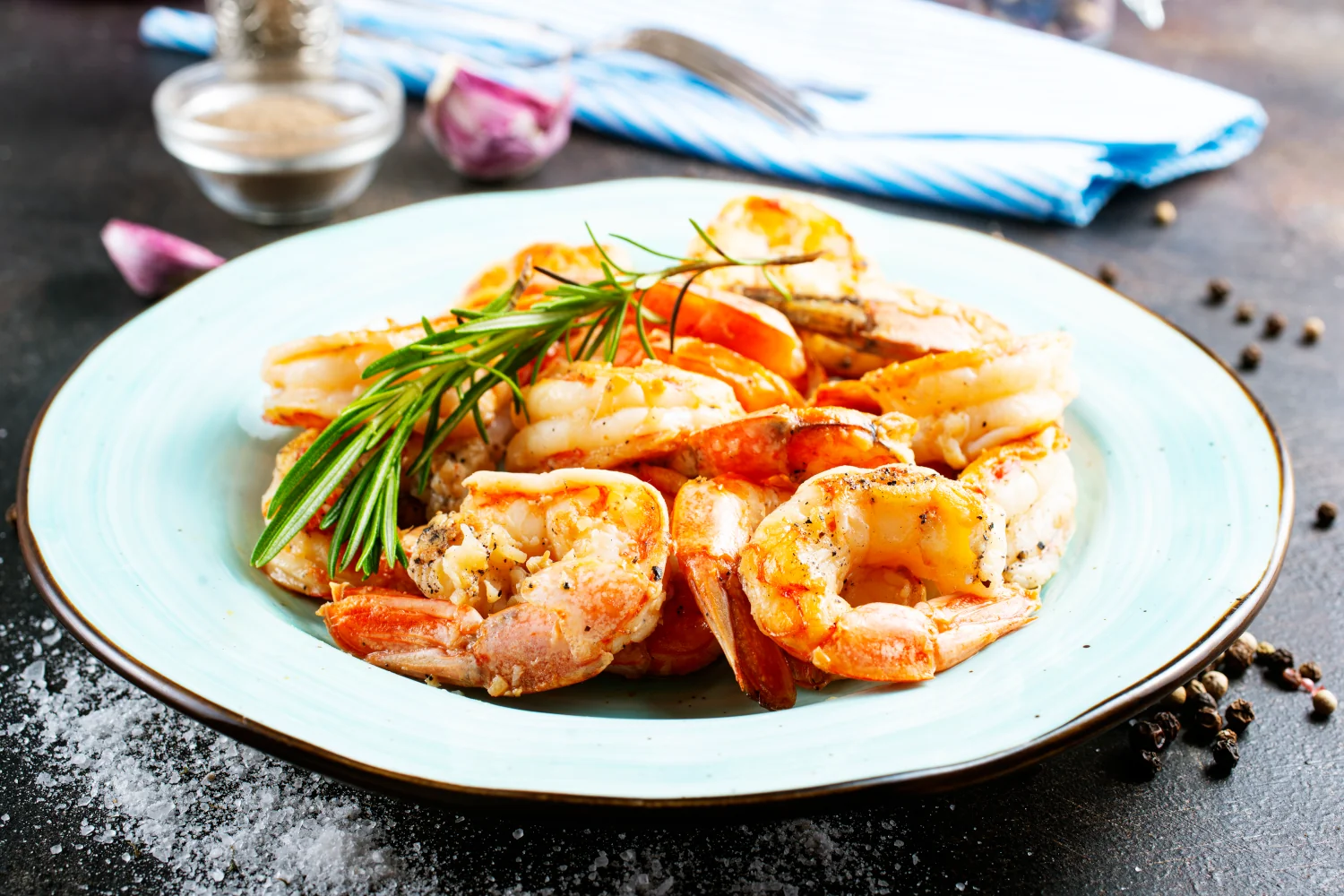
There is a moment, familiar to anyone who has eaten well along the Mediterranean coast, that is almost impossible to improve upon. A terracotta dish arrives at the table, still sizzling from the oven. In it, a dozen large prawns lie in a pool of olive oil the colour of liquid gold, fragrant with garlic, flecked with parsley, whispering of chilli and lemon. The bread is already in your hand. The wine is already cold. Outside, the sea is doing what the Mediterranean does — glittering, unhurried, entirely indifferent to your happiness, and yet somehow the cause of it.
This is gambas al ajillo, or gamberetti all’aglio, or crevettes à l’ail, depending on which shore you are sitting on. The dish changes its name as it travels, but the logic is the same everywhere: take the finest shrimp you can find, apply heat and good olive oil, add garlic, and get out of the way. It is a philosophy as much as a recipe, and it says something important about the Mediterranean relationship with this small, extraordinary crustacean.
The shrimp — used here interchangeably with prawn, as Europeans tend to — has shaped the cuisine, culture, and coastal economy of the Mediterranean for thousands of years. Its story is older than any recipe, richer than any single dish, and worth telling properly.
From Ancient Waters: Shrimp in the Classical World
The Mediterranean has always been full of shrimp. The warm, relatively shallow waters of the sea — particularly along the coasts of Spain, France, Italy, Greece, and North Africa — provide ideal habitat for dozens of species, from the tiny, sweet crevette grise of the Atlantic coast to the magnificent red scarlet shrimp of the deep Adriatic and Tyrrhenian seas.
Ancient Greeks and Romans were well acquainted with all of them. Greek texts refer to shrimp with evident appetite, and the Romans — whose enthusiasm for seafood was matched only by their capacity for excess — ate shrimp in considerable quantities and variety. Apicius devotes several passages of De Re Coquinaria to shellfish preparations, and shrimp appear alongside sea urchins, oysters, and cuttlefish as fixtures of the Roman table at every level of society.
Roman fish markets, the piscinae, were sophisticated operations that kept live shellfish in saltwater tanks for the urban wealthy, ensuring freshness in a world without refrigeration. Along the coast, fishermen developed techniques for catching shrimp at night using torches to attract them to the surface — a method still used in parts of the Mediterranean today, with electric lights replacing the ancient torches but the essential principle unchanged.
The Roman writer Pliny the Elder noted with characteristic thoroughness that shrimp were more plentiful in certain seas than others, and that those from warmer waters were superior in flavour to those of the north. He was not wrong. The warm, mineral-rich waters of the Mediterranean produce shrimp of a sweetness and depth that their Atlantic counterparts, for all their abundance, rarely match.
Spain: Passion on a Plate
No country in Europe has elevated the shrimp to a higher cultural status than Spain, and nowhere in Spain is the devotion more intense than along the Mediterranean and Atlantic coasts of Andalusia, Catalonia, and the Levante.
The gambas of Spain are not a garnish or an afterthought. They are a destination. In the fishing town of Palamós on the Costa Brava, the local gamba — a large, red-shelled prawn caught in the deep waters off the Catalan coast — is treated with a reverence usually reserved for truffles or aged Ibérico ham. The gamba de Palamós has its own protected geographical designation, its own annual festival, and its own devoted following of chefs and food lovers who travel specifically to eat it. Grilled over charcoal with nothing but sea salt, it is one of the great eating experiences in Europe. The head, sucked clean of its intensely flavoured juices, is the part the locals consider finest of all.
Further south, in Andalusia, the coquina and the gamba blanca of Huelva — pale, sweet prawns from the Atlantic mouth of the Guadalquivir river — are eaten with similar reverence. The fishing port of Sanlúcar de Barrameda, at the river’s mouth, is famous throughout Spain for its langostinos, large prawns grilled simply and eaten with cold manzanilla sherry, a combination of such precise rightness that it feels less like a recipe and more like a geographical fact.
Then there is gambas al ajillo, the dish that needs no introduction and no improvement. Born in the kitchens of Andalusia and spread across the country through the tapas tradition, it is the perfect expression of Spanish cooking’s central genius: the ability to take a handful of ingredients of extraordinary quality and do exactly enough with them to make the result unforgettable.
Italy: From the Adriatic to the Tyrrhenian
Italy’s relationship with the shrimp is long, regional, and deeply embedded in the cooking of every coastal community from Liguria in the north to Sicily in the south.
The Adriatic coast, particularly around the port cities of Rimini, Ancona, and San Benedetto del Tronto, has one of the richest shrimp fishing traditions in the Mediterranean. The mazzancolla — a large, striped prawn whose name varies by dialect across the Adriatic coast — is a prized catch, eaten grilled, fried, or dressed simply with olive oil and lemon in the Venetian and Romagnola tradition. The brodetto, a fish and shellfish stew whose variations are fiercely argued over from town to town along the Adriatic, almost always includes shrimp among its roster of seafood.
In Venice, the tiny schie — small grey shrimp caught in the lagoon — are a beloved ciccheto, the Venetian equivalent of tapas, served on a slice of white polenta with a drizzle of olive oil and a scattering of parsley. Their flavour is delicate, almost sweet, entirely unlike the robust prawns of the southern Mediterranean. They are the taste of the lagoon itself: briny, subtle, irreplaceable.
Sicily and the Italian south take a bolder approach. The gambero rosso — the scarlet shrimp, caught in deep waters off Sicily, Calabria, and Sardinia — is considered by many chefs to be the finest shrimp in the Mediterranean, possibly in the world. Bright red even before cooking, with flesh of extraordinary sweetness and a complex, almost lobster-like depth of flavour, it is served raw in the finest Sicilian restaurants, dressed with nothing but a thread of the best olive oil and perhaps a few grains of sea salt. To eat gambero rosso crudo for the first time is to understand, viscerally, what the Mediterranean has always known: that the sea, given the right conditions, produces ingredients of incomparable quality, and the cook’s greatest virtue is restraint.
Pasta e gamberetti — pasta with shrimp, tomato, and basil — is the everyday expression of this love, a dish eaten from Naples to Palermo in dozens of variations. The combination of sweet shrimp, acidic tomato, and fragrant basil is one of those flavour alignments that feels inevitable, as if it could not have been invented any other way.
Greece: The Aegean Table
Greece’s island-scattered coastline and the warm, clear waters of the Aegean provide some of the Mediterranean’s finest shrimp, and Greek cooking treats them with the spare elegance that characterises the best of Greek cuisine.
Garides saganaki — shrimp cooked in a tomato and feta sauce and baked in a small pan — is perhaps the most internationally recognised Greek shrimp dish, and for good reason. The combination of the sweet, firm shrimp with the sharp saltiness of feta and the acidity of tomato is a masterpiece of balance, the kind of dish that makes you stop mid-bite and reconsider everything you thought you knew about simplicity.
But the Greek approach to shrimp goes well beyond saganaki. On the islands, particularly Crete, Rhodes, and the Dodecanese, grilled shrimp with ladolemono — a dressing of olive oil and lemon juice — is the purest possible expression of Aegean cooking. The ladolemono is not a sauce in the French sense. It is a condiment, a brightener, applied with a light hand to let the flavour of the shrimp speak for itself.
The port of Kavala in northern Greece is known for its large, wild-caught prawns from the northern Aegean, eaten at harbour-side restaurants with ouzo and the unhurried pleasure that the Greeks call kefi — the spirit of joy, spontaneity, and good living. It is an untranslatable word, but a plate of grilled prawns beside the Aegean goes a significant way towards explaining it.
France: The Provençal Touch
France’s Mediterranean coast — Provence and the Languedoc — brings its own distinct character to the shrimp. The Provençal kitchen, built on olive oil, tomato, garlic, herbs, and the fierce sunshine of the south, treats shrimp as one ingredient in a broader orchestral arrangement rather than the soloist it tends to be in Spain or Italy.
Bouillabaisse, the great fish stew of Marseille, includes shrimp among its traditional cast of seafood, though the true Marseillais will tell you — correctly — that the star of the dish is the rascasse, the ugly, spiny scorpionfish that gives the broth its depth. Shrimp in Provence are more commonly found in the soupe de poissons, a smooth, intensely flavoured fish soup served with rouille and croutons, where they contribute sweetness and body to the base.
Crevettes provençales — shrimp sautéed with tomato, garlic, thyme, and a splash of pastis, the anise-flavoured spirit of the south — is a dish that captures the personality of Provence in a single pan. The pastis adds a faint, aromatic sweetness that lifts the whole preparation into something distinctly of its place and time and climate.
The Deeper Mediterranean: Turkey, Croatia, and Beyond
The European Mediterranean does not end at France, Spain, Italy, and Greece. The coastlines of Croatia, Slovenia, Montenegro, and — in cultural if not political terms — Turkey all share in the wider Mediterranean shrimp tradition, each adding their own inflection.
Croatia’s Dalmatian coast, with its hundreds of islands and clear Adriatic waters, produces excellent scampi — the small lobster-like crustacean that in Croatia and Italy refers to the Norway lobster rather than the shrimp, a nomenclature that causes confusion well beyond the region. True shrimp, kozice in Croatian, are eaten grilled with olive oil and lemon or added to the buzara, a simple sauce of white wine, garlic, and breadcrumbs that is the signature preparation of the Adriatic coast.
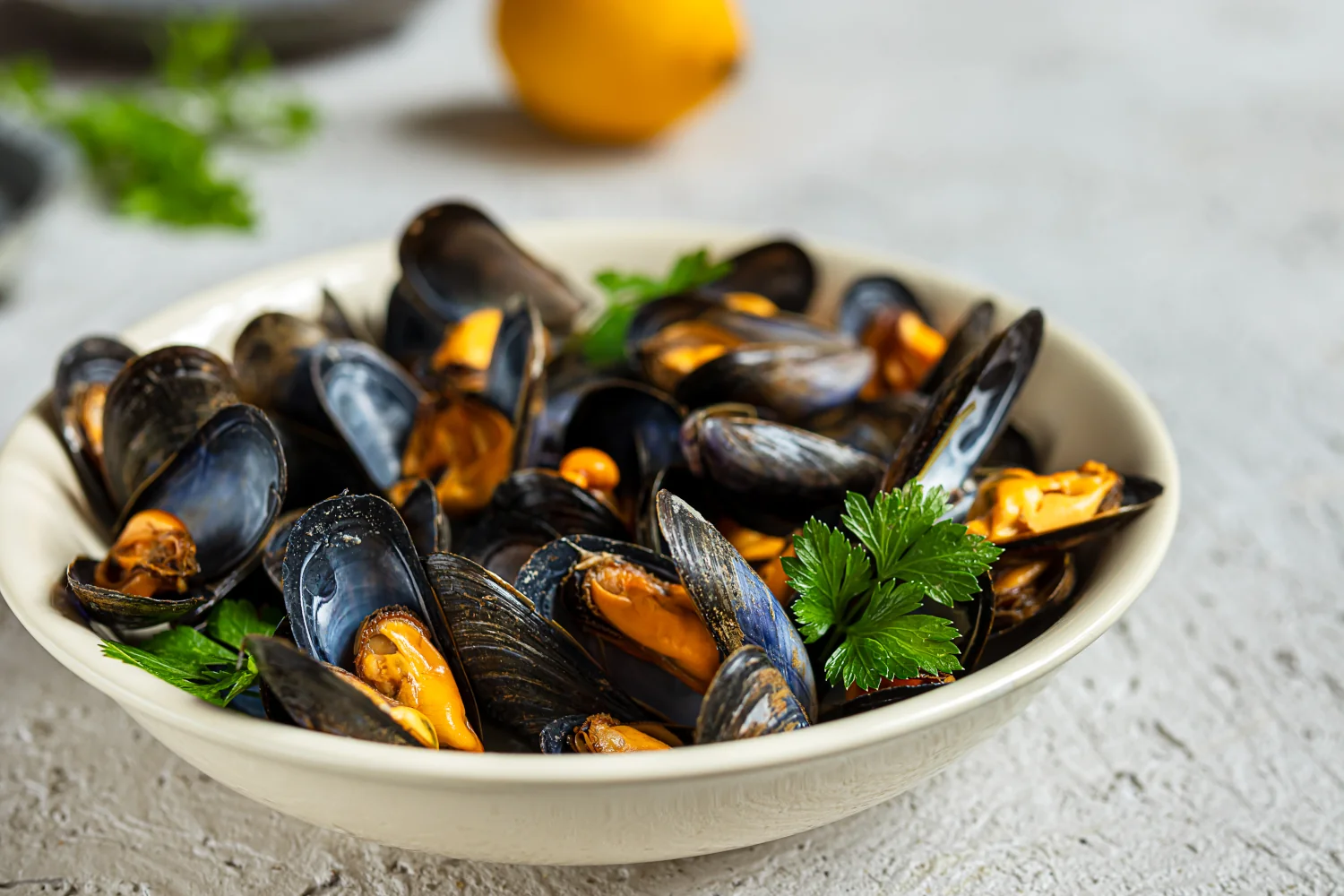
Turkey’s Aegean and Mediterranean coastlines contribute a tradition of midye dolma — stuffed mussels — and karides güveç, a shrimp casserole baked with tomatoes, peppers, and kashar cheese that is the Turkish cousin of the Greek saganaki and speaks to the shared culinary heritage of a sea that has connected rather than divided its surrounding cultures for millennia.
Sustainability and the Future of the Mediterranean Shrimp
The Mediterranean shrimp faces a challenge that no recipe can solve: overfishing. Several species, including the prized red shrimp of the deep Mediterranean, have seen significant population declines due to intensive trawling, and the European Union has introduced increasingly strict regulations on fishing seasons and methods in an attempt to allow stocks to recover.
The response from the culinary world has been broadly positive. Chefs across the Mediterranean have become vocal advocates for sustainable fishing practices, promoting smaller, day-boat catches and seasonal eating over year-round availability. The gamba de Palamós, with its strict quota system and protected status, is held up as a model for how high-value, sustainably managed shrimp fisheries can coexist with culinary culture.
Aquaculture — shrimp farming — is expanding along Mediterranean and Atlantic European coastlines, with operations in Spain, France, Italy, and Greece developing techniques to raise shrimp in cleaner, more controlled conditions than the intensive Asian farming methods that have dominated global shrimp production. European farmed shrimp remain a niche and expensive product, but the quality, when the farming is done well, is genuinely impressive.
A Final Word at the Water’s Edge
The shrimp is a small thing. Pink and curved and modest, it fits in the palm of your hand with room to spare. And yet, across thousands of years and dozens of cultures, it has been pulled from the Mediterranean, cooked with whatever was best and closest, and placed on tables from Valencia to Venice, from Marseille to Mykonos, feeding fishermen and philosophers, emperors and ordinary families with equal generosity.
The Mediterranean has always understood something that the rest of the world is slowly catching up to: that the best food comes from the best ingredients, treated with knowledge and respect and the confidence to leave well enough alone. The shrimp, in its simplicity, its sweetness, and its endless adaptability, embodies that understanding entirely.
Order the gambas. Suck the heads. Drink the wine. The Mediterranean has been waiting.