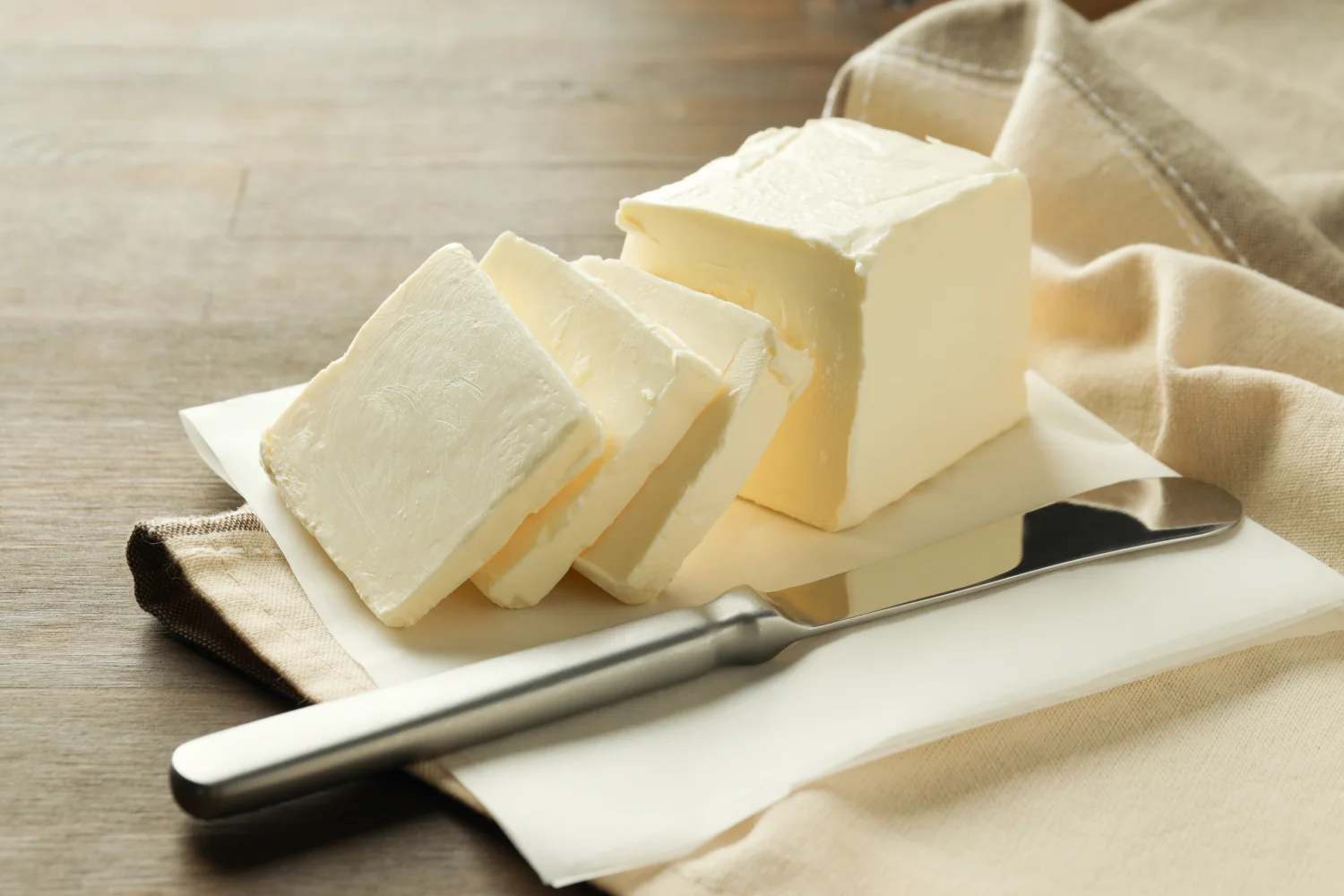
Few ingredients in the culinary world carry as much history, cultural weight, and sheer sensory pleasure as real butter. From the cream-slicked kitchens of Normandy to the grand restaurants of Vienna, butter has been the backbone of European cooking for centuries. Yet its journey has not been without controversy. Demonised in the fat-phobic decades of the late twentieth century, celebrated in the age of traditional food revivals, and now firmly re-established as both a gourmet staple and a symbol of culinary integrity, real butter deserves a thorough, honest examination. What makes it so special? Why did we ever doubt it? And what does it truly bring to the table?
A History Written in Cream
Butter’s story in Europe begins long before professional kitchens or printed recipes existed. Archaeological evidence suggests that butter production in Northern Europe dates back at least ten thousand years, closely tied to the domestication of cattle. In Ireland, archaeologists have unearthed “bog butter” — ancient caches of preserved butter buried in peat marshes, some thousands of years old — suggesting that butter was valuable enough to store and protect like treasure.
In the Mediterranean south, olive oil reigned supreme, but north of the Alps, dairy fat was the cooking medium of choice. Celtic tribes, Norse settlers, and Germanic peoples all built their cuisines around butter. By the medieval period, butter had become so central to Northern European diets that the Catholic Church’s prohibition of dairy during Lent created an enormous theological and culinary crisis — and, rather famously, a lucrative dispensation trade. The so-called “Butter Tower” of Rouen Cathedral in France was reportedly funded in part by fees paid by wealthy parishioners for permission to eat butter during the fasting season.
By the Renaissance, European court cuisine had elevated butter to an art form. French chefs in particular developed elaborate techniques — beurre blanc, beurre noisette, beurre monté — that transformed a simple dairy product into instruments of extraordinary flavour. The French culinary tradition, which would go on to dominate the world’s professional kitchens for three centuries, was built on a foundation of butter.
What Is “Real” Butter, Exactly?
Before we can appreciate what real butter offers, it helps to understand what distinguishes it from its many substitutes and imitations.
Real butter is made from churned cream, separated from whole cow’s milk. In its most basic form, it contains roughly 80% milk fat, 16–18% water, and a small percentage of milk solids. That sounds simple — and it is, in the best possible way. The complexity lies not in the process but in the raw material: the quality of the cream, the breed of cattle, their diet, the season, and the region all affect the butter’s flavour, colour, and texture.
European-style butter, a term used frequently today, refers to butter with a higher fat content — typically 82–86% — and often with a slight tang produced by culturing the cream before churning, in a similar manner to yoghurt. This is the traditional style across much of France, Belgium, Germany, and Scandinavia. The extra fat means less water, which makes European butter melt more smoothly, brown more evenly, and produce flakier pastry.
Appellation d’Origine Protégée (AOP) butters — such as Beurre de Bresse, Beurre Charentes-Poitou, and Échiré — carry the same protected designation as fine wines and cheeses. They can only be produced in specific regions using milk from specific breeds grazed on specific pastures. The flavour differences between these butters are real and striking: grassy, floral, nutty, sweet, tangy, each depending on its origin.
Compare all of this to margarine or vegetable-oil spreads — industrially produced goods designed to mimic butter’s spreadability at lower cost — and the distinction becomes obvious. Those products are engineered. Real butter is grown.
The Taste Argument: Why Nothing Compares
Ask any serious cook why they use real butter, and taste is always the first answer. This is not nostalgia or culinary snobbery. It is chemistry.
Butter’s flavour comes from an extraordinarily complex mixture of compounds, including diacetyl (responsible for that characteristic creamy, rich note), butyric acid (giving it a slight tang), lactones, and dozens of other volatile aromatic molecules. When butter is heated, these compounds interact to produce new flavours — caramel notes when it browns, nuttiness when the milk solids toast in the pan.
This flavour complexity simply cannot be replicated by a blend of vegetable oils, even with additives. Margarine manufacturers have spent decades and considerable fortunes trying to approximate the taste of butter. They have never fully succeeded, and professional cooks have always known it.
Consider the classic French sauce beurre blanc — literally “white butter.” It is made by reducing white wine and shallots to a syrup, then whisking in cold butter piece by piece until a glossy, emulsified sauce forms. The result is delicate, complex, slightly acidic, rich without being heavy. No substitute produces anything close to the same result. Vegetable fats either fail to emulsify properly or deliver a flat, greasy mouthfeel with none of the brightness.
Or consider croissants. A great croissant has hundreds of paper-thin, shattering layers of dough separated by butter. As it bakes, the water in the butter turns to steam, forcing the layers apart. The milk solids brown, giving the crust its colour and a toasted, almost nutty flavour. The fat coats each layer, making it tender and rich. The result is one of the most texturally complex things in baking — and it simply does not work the same way with anything else.
Butter is also a flavour carrier. Many of the aromatic compounds in herbs, spices, and other ingredients are fat-soluble rather than water-soluble. Cooking aromatics in butter extracts and distributes their flavours in ways that water-based or leaner cooking mediums cannot match. A sprig of thyme basted over a roasting chicken with foaming butter delivers flavour in a way that olive oil, for all its qualities, does not replicate.
Butter Across European Culinary Traditions
One of the most fascinating aspects of real butter is how differently it is used across European cultures, each tradition revealing something unique about the ingredient’s versatility.
France is perhaps the most butter-obsessed culinary culture on earth. Classical French cooking, as codified by Escoffier in the late nineteenth and early twentieth centuries, uses butter at virtually every stage: to sweat aromatics, to enrich sauces, to finish dishes with a final mount of cold butter that adds gloss and body, and to baste meats. French pastry — tarts, pâte feuilletée, croissants, financiers, madeleines — is essentially an extended meditation on butter. The French consume more butter per capita than almost any other nation, yet have one of the lowest rates of heart disease in the developed world, an epidemiological puzzle known as the “French Paradox” that researchers have never fully explained.
Denmark and Scandinavia have a butter culture shaped by dairy farming and long winters. Danish butter biscuits are internationally famous, and the tradition of smørrebrød — open-faced sandwiches on dense rye bread — places butter front and centre as a spread and flavour base. Scandinavian baking, from Norwegian krumkake to Swedish cardamom buns, depends on high-quality butter for its characteristic richness.
Germany and Austria use butter extensively in baking — consider Stollen, Gugelhupf, and Kipferl — as well as in rich meat sauces and potato dishes. Viennese pastry, one of Europe’s great baking traditions, is unthinkable without premium butter.
The British Isles have their own deeply buttery food culture: shortbread in Scotland, clotted cream and butter with scones in England, bara brith in Wales. Traditional British cooking, often unfairly maligned, relies heavily on butter in its finest forms — a proper roast with butter-basted skin, a well-made butter sauce for fish, the kind of flaky butter pastry that defines a great pie.
Italy, while primarily an olive oil culture in the south, has a strong butter tradition in the north. Risotto finished with a generous mount of cold butter (mantecatura) achieves its signature creaminess entirely through this technique. Pasta al burro — pasta with butter and Parmesan — is one of the simplest and most satisfying dishes in the entire Italian canon.
The Health Debate: From Villain to Vindicated
No discussion of butter is complete without addressing the decades-long controversy over its health effects — and the remarkable reversal of scientific and public opinion that has unfolded over the past two decades.
The story begins in the 1960s, when the researcher Ancel Keys published influential work linking saturated fat consumption to heart disease. Butter, as a saturated fat, became a dietary villain. Governments issued guidelines recommending reduced butter consumption. The food industry rushed to fill the gap with margarine — partially hydrogenated vegetable oils presented as a “heart-healthy” alternative.
The result was an unmitigated nutritional disaster. We now know that the trans fats in hydrogenated vegetable oils are significantly more harmful than the saturated fats they replaced. Keys’ original research was flawed, cherry-picking data from countries that supported his hypothesis whilst ignoring those that did not. Large-scale meta-analyses in the 2010s found no significant evidence that saturated fat consumption is associated with increased cardiovascular risk.
Meanwhile, research into the specific fats in butter has painted a more nuanced picture. Butter from grass-fed cattle contains meaningful amounts of omega-3 fatty acids, conjugated linoleic acid (CLA), and fat-soluble vitamins including A, D, E, and K2. It is a real food with genuine nutritional complexity, not merely a vehicle for calories.
This does not mean butter should be consumed without limit. Like all calorie-dense foods, moderation matters. But the blanket demonisation of butter that shaped dietary guidelines for thirty years appears, in retrospect, to have been founded on shaky science. Most nutrition researchers today take a far more measured view: real butter, as part of a balanced diet, is not the enemy it was once portrayed to be.
Culinary Fashion and the Return of Real Butter
The story of butter’s fall and return to grace tracks closely with broader shifts in culinary culture — shifts worth understanding for anyone with a serious interest in food.
The low-fat craze of the 1980s and 1990s removed butter from many professional and home kitchens. But it was never fully displaced amongst serious cooks. French and European chefs continued to use it as a matter of course, and increasingly, they were seen as custodians of a tradition that mass-market food culture had thoughtlessly discarded.
The early 2000s brought the beginnings of a reversal. Chefs such as Thomas Keller in the United States and Heston Blumenthal in the UK brought classical butter-rich technique back into the spotlight. The farm-to-table movement, which gathered pace through the 2000s and 2010s, emphasised real, whole ingredients over processed alternatives — and butter, as one of the most natural and traditional of all dairy products, benefited enormously.
Artisan butter has become a genuine food trend in its own right. Speciality butters from small dairies — cultured, hand-rolled, finished with fleur de sel, infused with herbs — now command premium prices at farmers’ markets and fine food shops. Restaurants present their butter course with the same seriousness once reserved for cheese. The simple act of serving excellent bread with exceptional butter has become, in many fine-dining contexts, a statement of culinary philosophy.
Social media has accelerated this revival. The visual appeal of golden butter melting over warm bread, of croissant layers gleaming, of a perfect beurre blanc coating a piece of fish — these images perform extraordinarily well online and have introduced younger generations to butter’s pleasures in an entirely new way.
Working with Real Butter: Practical Advantages
For cooks — whether professional or domestic — the argument for real butter extends well beyond taste and health. It is, quite simply, a superior working ingredient in most culinary contexts.
Emulsification: Butter’s combination of fats, proteins, and water makes it a natural emulsifier. Sauces built on butter have body, gloss, and stability that vegetable fats cannot easily replicate.
Browning: The milk solids in butter undergo the Maillard reaction when heated, creating nutty, caramelised flavours. This is the magic of beurre noisette — brown butter — which transforms in minutes from simple fat into a complex, aromatic sauce or basting medium.
Pastry texture: The water content of butter creates steam during baking, producing flaky layers. The fat coats flour proteins, limiting gluten development and yielding tender, melt-in-the-mouth textures. No shortening or oil achieves quite the same result.
Finishing: A small knob of cold butter whisked into a hot sauce at the last moment — a technique called monter au beurre — adds richness, body, and a silky texture that transforms a good sauce into a great one. It takes seconds and costs almost nothing.
Aroma: Melting butter is one of the most universally appealing aromas in cooking. It signals warmth, richness, and comfort in a way that few other ingredients can match — not merely as sentiment, but practically, since aroma is a central component of flavour.
Does Real Butter Add Value? An Honest Assessment
Given everything above, the answer is straightforward: yes, for the vast majority of European culinary applications, real butter adds genuine, irreplaceable value.
It adds value in taste — delivering flavour complexity that no substitute has matched. It adds value in texture — producing results in pastry, sauces, and baked goods that other fats cannot replicate. It adds value nutritionally — offering a more defensible health profile than the processed alternatives once recommended in its place. And it adds value culturally — connecting the cook to centuries of European tradition and to a way of eating that prioritises real, whole, traceable ingredients.
The caveats are real. Butter is more expensive than alternatives, particularly high-quality artisan or AOP-certified varieties. It has a lower smoke point than many cooking oils, making it unsuitable for very high-heat applications (though this is easily addressed by clarifying it, or by using it alongside a high-smoke-point oil). And for those following plant-based diets, it is obviously off the table.
But within its proper domain — European baking, French sauces, Northern European cooking traditions, finishing and enriching dishes — butter is not merely adequate. It is optimal. The decades during which the food industry persuaded cooks to replace it with industrially produced alternatives were, from a culinary perspective, largely a period of impoverishment.
The Chef’s Perspective
Walk into any serious European kitchen and you will find butter in abundance. It will likely be a European-style, high-fat variety, kept at different temperatures for different purposes: softened for baking, cold for pastry and sauce-making, clarified for high-heat cooking. The head chef will have a firm view on which butter they prefer and why. It will not be an afterthought.
This matters because professional chefs are not sentimentalists. They are pragmatists working under pressure to consistent standards in competitive environments. If butter were merely a traditional affectation — if something else genuinely performed as well at lower cost — it would have been replaced long ago. It has not been replaced. It has, in fact, been resurgent.
The best contemporary European chefs — from the French bistro to the Michelin-starred tasting menu — use butter with intent and respect. They choose it carefully, use it skilfully, and serve it proudly. That consensus, built across thousands of professional kitchens over generations, is perhaps the strongest argument of all for real butter’s irreplaceable place in European cuisine.
Conclusion: The Golden Standard
Real butter is not trendy. It is not a superfood or a fad. It is something older and more reliable than either: a cornerstone ingredient with deep roots in European culinary culture, a flavour of extraordinary complexity and versatility, and a food that has survived every attempt to replace or vilify it.
The health science, once arrayed against it, has largely reversed course. The culinary case was never seriously in doubt. And culturally, butter has undergone a full rehabilitation — from dietary pariah to artisan luxury to everyday essential, depending on the context.
For anyone cooking European food seriously — whether at home or professionally — working with real, quality butter is not a luxury or an indulgence. It is a commitment to doing the job properly. The difference it makes is real, measurable, and consistently worth it.
In European cuisine, real butter is not one option among many. It is, and has always been, the golden standard.