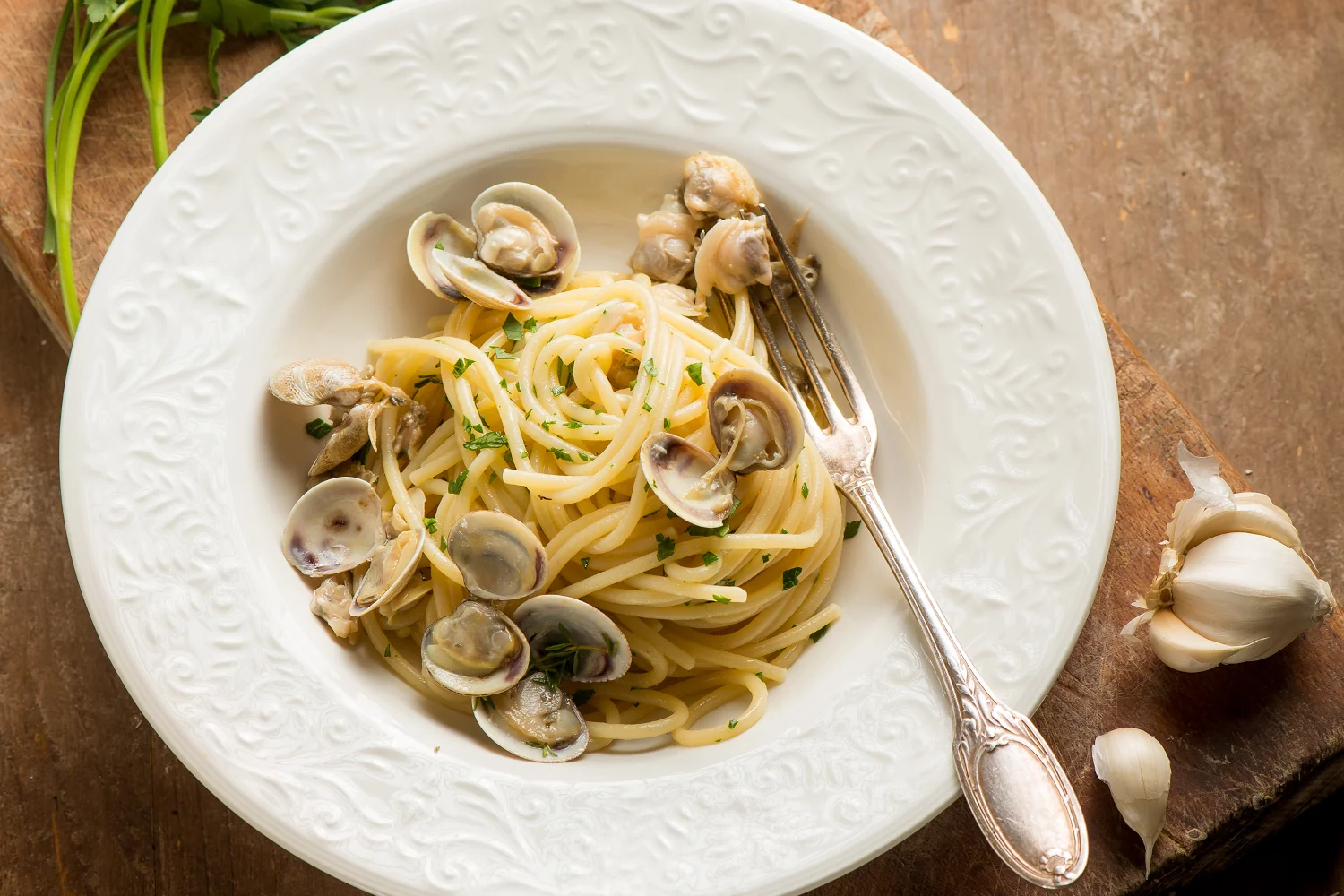
Ingredients for 4
- 12 oz (340g) spaghetti pasta
- 2 tbsp (30ml) olive oil
- 2 cloves garlic, thinly sliced
- 1 lb (450g) fresh clams, scrubbed and soaked in cold water (to remove any sand)
- 1/2 cup (120ml) dry white wine
- 1/4 tsp red pepper flakes(optional)
- 1/4 cup (30g) fresh parsley, chopped
- Salt and pepper to taste
Recipe
- Bring a large pot of salted water to a boil. Add the spaghetti and cook until al dente, about 9-11 minutes. Reserve 1/2 cup (120ml) of pasta water and then drain the pasta.
- While the pasta is cooking, heat the olive oil in a large skillet over medium heat. Add the thinly sliced garlic and sauté for 1-2 minutes until fragrant, being careful not to burn it.
- Add the clams to the skillet with the garlic and cook for 2 minutes. Pour in the white wine and cover the skillet. Cook for another 5-7 minutes, or until the clams have opened. Discard any clams that do not open.
- Add the cooked spaghetti to the skillet with the clams and toss gently to coat the pasta in the garlic and clam juices. If the mixture seems dry, add a bit of the reserved pasta water to create a silky sauce. Stir in the red pepper flakes (if using) and fresh parsley. Season with salt and pepper to taste. Serve the spaghetti alle vongole hot with lemon wedges on the side for added freshness.
- Some people prefer this dish without the shells, so remove them and keep only the clams meat if required.
Did You Know?
Clams have long been a staple in Mediterranean cuisine, particularly in coastal regions like Italy, where seafood plays an integral role in local culinary traditions. The use of clams in Italian dishes, especially in pasta, dates back centuries, with Spaghetti alle Vongole being one of the most iconic seafood pasta dishes.
Clams are often harvested from both wild and farmed sources, with cultivation practices dating back to ancient times. In Italy, coastal regions such as Veneto, Sicily, and Campania are known for their clam farming. The process of clam cultivation involves creating beds in shallow waters, where the mollusks are raised in controlled environments to ensure healthy growth. These beds are often placed in estuaries or other sheltered areas, where the water is nutrient-rich. Clams filter feed, meaning they naturally purify the water by consuming plankton and other tiny organisms, which contributes to their unique flavor.

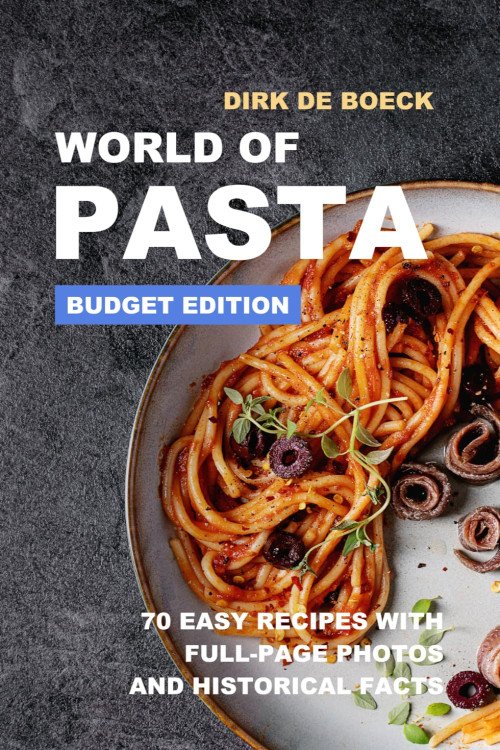
This recipe, and others like it, can be found in our best selling book “World of Pasta”.
Volume: 180 pages
Language: English
Format: 6 x 0.64 x 9 inches
ISBN-13 number: 978-9083524856